
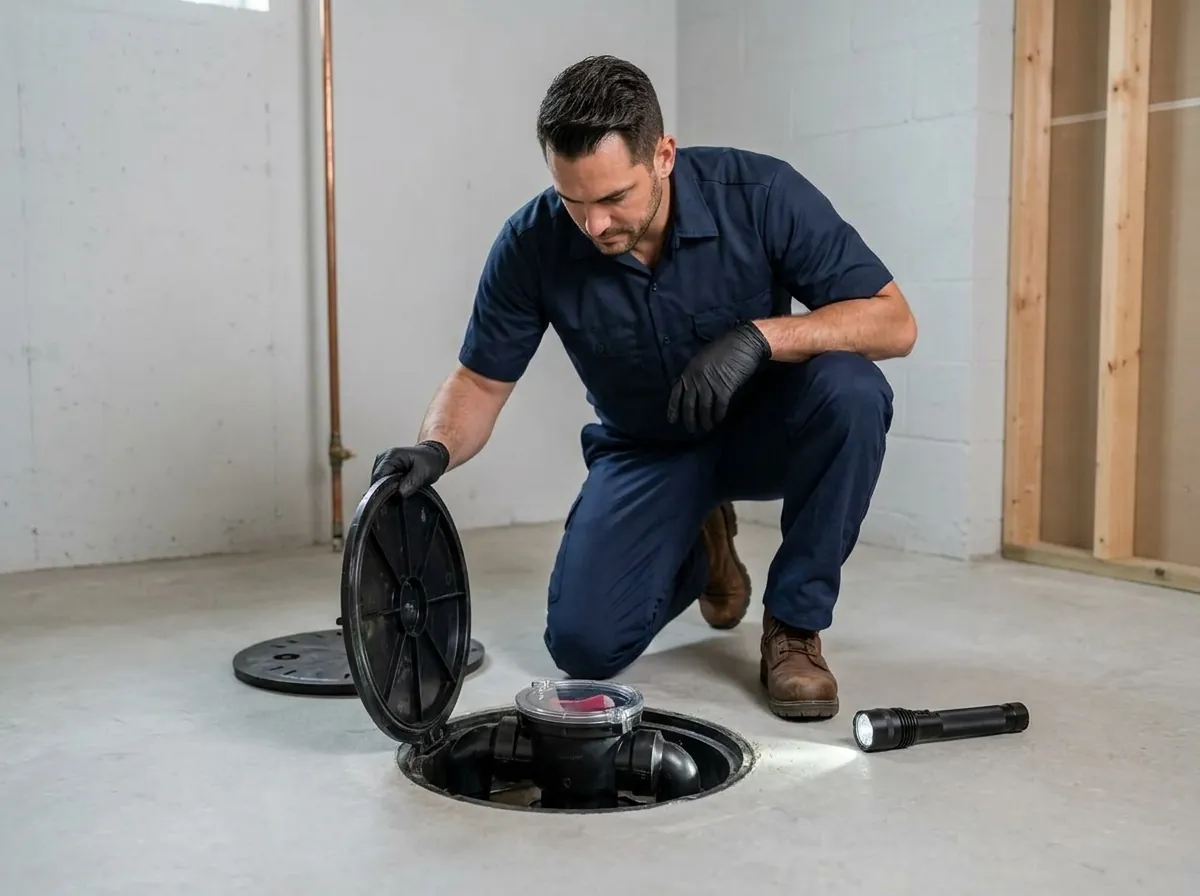
What does a backwater valve do?
It lets wastewater flow from the house to the municipal sewer, and closes as soon as water tries to go the other way. Without one, when the public system overflows, sewer water rises to the lowest point in the building: the floor drain, the shower or the basement toilet.
Inside, a small flap swings freely while water drains normally. When the level rises in the street sewer, the pressure pushes the flap against its seat and closes the passage. It’s simple, but it only works if the flap moves freely and nothing keeps it from closing: a stuck piece of debris, buildup or a worn part is enough to let water through.
The valve only protects the outlets it is installed on. A fixture connected downstream, or a forgotten outlet, stays open to backups. That’s why the location matters as much as the device itself.